Silent Seas: The Electric Superyachts Redefining Life on the Water
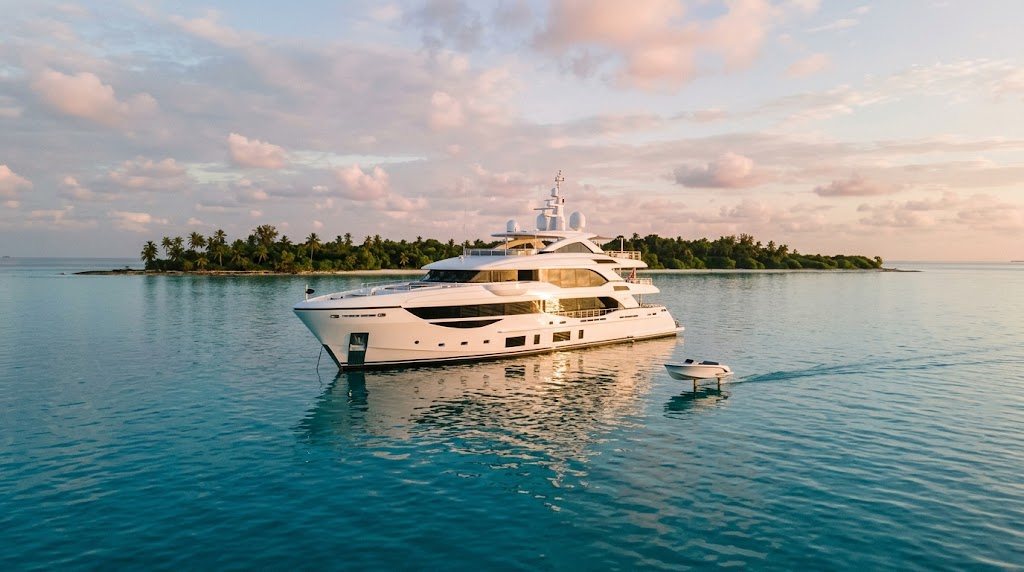
Hydrogen, green methanol, sunlight and batteries are giving yacht owners something rare at sea: true quiet. Meet the builders and launches setting the pace.
The most exciting sound on the water this decade may be no sound at all. A new generation of yachts is cruising on hydrogen, green methanol, sunlight and batteries, turning the anchorage into a place of near-total calm.
This is no longer a concept-board dream. Shipyards in the Netherlands, Italy, Poland and Sweden have launched real vessels with real guests aboard. Here is a tour of the builders behind the quiet revolution and the moments that made the past two seasons so memorable.
Feadship's Breakthrough sets a new high-water mark
When Feadship launched Project 821 in May 2024, the Dutch yard was making history at scale. The 118.8-meter yacht, named Breakthrough and delivered in May 2025, is widely described as the world's first hydrogen fuel-cell superyacht. She carries up to 4.4 metric tons of liquid hydrogen in cryogenic tanks chilled to minus 253 degrees Celsius.
Fuel cells from PowerCell Group, with a combined output of 3 megawatts, feed both the hotel load and propulsion. Running on fuel cells alone, Breakthrough can cruise at up to 10 knots, and the only byproduct is water. In June 2025 the port of Amsterdam celebrated the first bunkering of liquid hydrogen into a yacht, a milestone its chief harbor master described with evident pride.
The guest experience matches the engineering. Breakthrough welcomes 30 guests across five decks, with 14 balconies, seven fold-down platforms for direct sea access, an 8.2-meter infinity pool and an underwater viewing lounge where guests can watch marine life glide past. For longer passages, hybrid diesel-electric generators that can run on renewable HVO fuel extend her range to roughly 6,500 nautical miles.
Sanlorenzo brings green methanol to the anchorage
Italy's Sanlorenzo took a different and equally elegant route. In May 2024 the yard launched Almax, the first yacht in its 50Steel line, from its La Spezia facilities. The 49.9-meter yacht uses a fuel-cell reformer that converts green methanol into electricity, delivering up to 100 kilowatts.
That figure matters because of how yachts are actually used. Sanlorenzo estimates the system can cover up to 90 percent of a superyacht's typical usage time, most of which is spent at anchor and in port. With the reformer handling the hotel load, Almax can rest in a bay completely emission-free, with no generator hum to compete with the waves.
For owners, the appeal is practical as well as poetic. Methanol is a liquid at room temperature, which makes it simple to store aboard a yacht of this size. It is a smart bridge between today's infrastructure and tomorrow's cleaner fuels.
Sunreef turns the whole yacht into a solar panel
Poland's Sunreef Yachts has spent years refining the solar-electric catamaran, and its newest flagship shows how far the idea has come. In June 2026 the Gdańsk shipyard launched Ipharra II, the first Sunreef 100 Eco, a 29.3-meter sailing catamaran.
Solar panels are integrated directly into the hull, superstructure and bimini, so the yacht harvests energy from nearly every sunlit surface. Twin electric motors draw on a 770-kilowatt-hour battery bank, giving guests long stretches of silent motoring between sails. The yacht was slated for its world debut at the Monaco Yacht Show in September 2026.
The catamaran format adds a lifestyle bonus. Wide beams create generous deck space and stable living areas, which makes these yachts a natural fit for island-hopping in the Bahamas or the Grenadines.
Candela proves that flying on water feels effortless
Not every highlight is a superyacht. Sweden's Candela has made electric hydrofoils one of the most talked-about technologies on the water. Its foils lift the hull clear of the surface, which slashes drag and smooths out chop.
The company's P-12 passenger vessel, which operates in Stockholm's public transit network, offers a vivid proof point. According to Candela's April 2025 release:
- Speed: the P-12 cruises at 25 knots with a top speed of 30 knots.
- Range: about 40 nautical miles at cruising speed.
- Efficiency: 84 percent less energy per passenger-kilometer than the diesel vessels on the same route.
- Time saved: roughly 30 minutes from Ekerö to Stockholm City Hall, versus 45 to 55 minutes on conventional boats.
The same technology powers Candela's C-8 leisure boat, which won European Powerboat of the Year in 2022. More than 150 units had been sold by spring 2025, and the boat makes a quiet, elegant tender or day boat.
Why silent cruising is the new definition of luxury
Luxury at sea has always been about freedom: the freedom to wake in a new cove, to swim before breakfast and to dine under the stars. Hybrid and electric propulsion adds a new dimension to that freedom. Without a generator running, guests hear the water lapping at the hull, the wind in the rigging and the birds overhead.
Four paths to the same calm
What makes this moment so exciting is the variety of approaches. Each builder has matched its technology to the way its owners like to cruise:
- Hydrogen fuel cells: Feadship's choice for Breakthrough, producing electricity with water as the only byproduct.
- Green methanol reformers: Sanlorenzo's answer for quiet, emission-free time at anchor.
- Solar and battery: Sunreef's catamarans gather energy from the sun across their decks and superstructure.
- Electric hydrofoils: Candela lifts the hull above the water for efficient, smooth and quiet travel.
Rather than one winning formula, owners now enjoy a menu of options. That diversity is a sign of a healthy, creative industry, and it means there is a quiet yacht for almost every style of cruising.
What owners and charter guests are gaining
The benefits reach far beyond the engine room. Crew members on Breakthrough, for example, spend less time cleaning when the yacht runs on fuel cells alone. Fewer vibrations mean better sleep. Cleaner air on the aft deck makes the sunset cocktail even more pleasant.
There is also a sense of stewardship that many guests find rewarding. Anchoring in a marine reserve without exhaust or noise feels like being a welcome visitor rather than a passing intruder. That emotional dividend is becoming part of the brand promise for the world's finest yards.
Setting a quieter course
Whether you are commissioning a new build, planning a charter or simply dreaming of a season in the Mediterranean, the electric era opens wonderful new options. A few practical ideas:
- Ask about hotel-load solutions. A yacht that can run quietly at anchor will reshape how your days and nights feel aboard.
- Consider a foiling tender. An electric hydrofoil day boat is one of the easiest ways to experience silent cruising right now.
- Visit the boat shows. Events such as the Monaco Yacht Show are a wonderful chance to step aboard a hybrid or electric yacht and feel the difference.
- Charter before you commit. A week aboard a solar-electric catamaran is the most enjoyable research you will ever do.
The quiet yacht has arrived, and it is beautiful. The next time you drop anchor in a turquoise bay, the loudest thing you hear may be your own laughter.
Sources
- BOOTE Magazine, "Breakthrough premiere in Amsterdam: 119-metre yacht stores hydrogen," June 6, 2025
- Wikipedia, "Breakthrough (yacht)," citing Feadship, SuperYacht Times and YachtBuyer, accessed October 2026
- Boat International, "Sanlorenzo delivers first fuel-cell powered 50Steel superyacht," August 1, 2024
- Boat International, "Sunreef 100 Eco sailing catamaran first unit launch: Ipharra II," June 17, 2026
- Candela (press release via Mynewsdesk), "The world's first flying electric ferry is a success: Stockholm expands service," April 8, 2025